
Quick answer
Dynamic packaging is the real-time bundling of travel components (a flight plus a hotel, often with transfers, activities or ancillaries) into one package sold at a single price. Because component prices are hidden inside the bundle (opaque pricing), sellers can discount without lowering public fares, protect margins and sell the whole trip instead of just a seat.
Most travellers are buying a trip, not a flight, a hotel and a transfer booked separately. Dynamic packaging sells them the trip as one product: one price and one checkout, assembled on the fly from live inventory. Below: how it works, why it matters for margins, and how it differs from static packages.
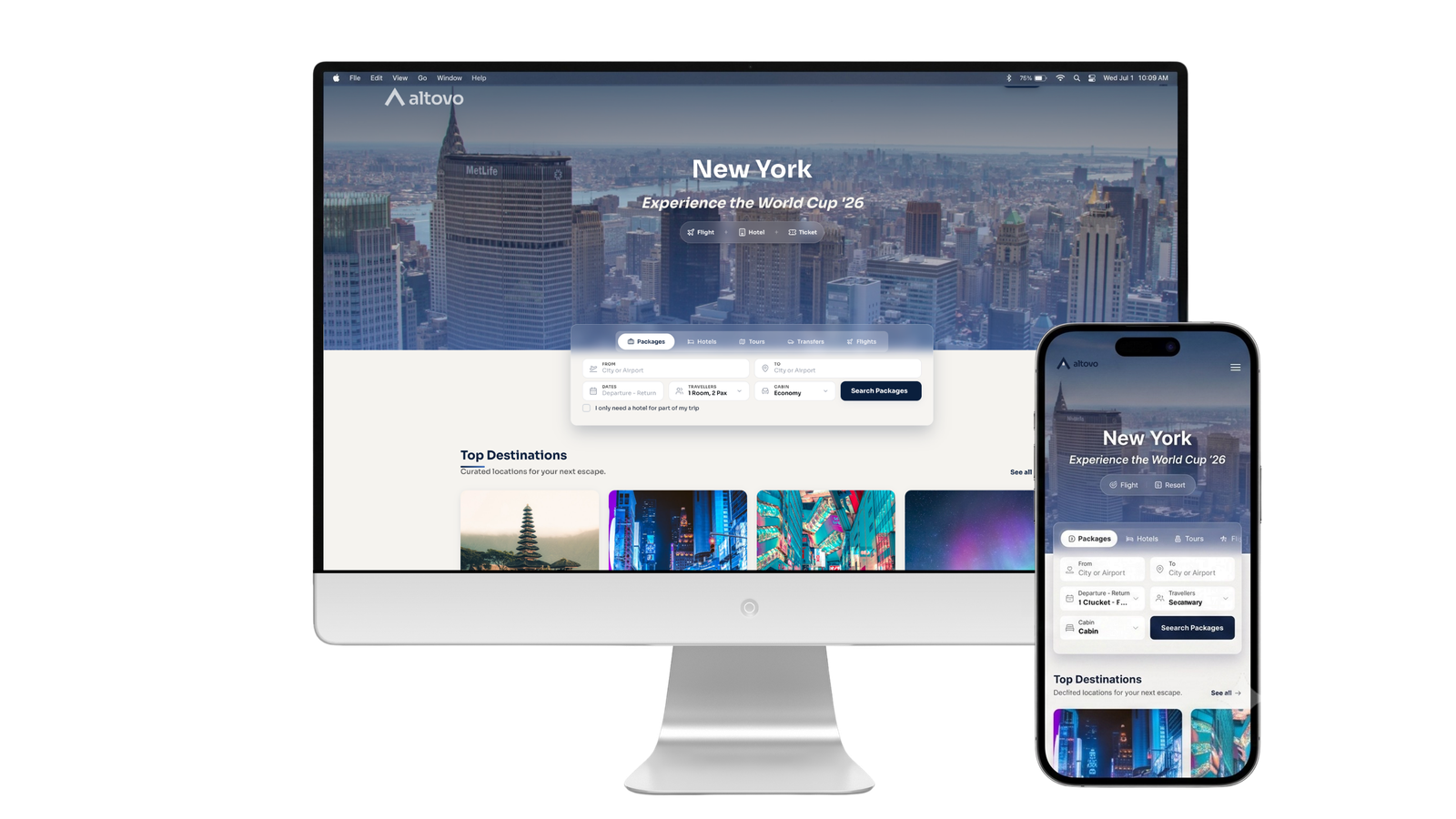
What is dynamic packaging?
Dynamic packaging is the practice of combining two or more travel components into a single product, priced and sold together, and built in real time for each customer. Instead of selling a fixed, pre-made holiday, the system pulls live availability and pricing for each component the moment a customer searches, then combines them into one bookable package at one total price.
The classic example is a flight plus a hotel, but a package can go much wider: transfers, tours and activities, car hire, and ancillaries such as bags, seats or insurance. The defining traits are that the bundle is assembled on demand and that the customer sees and pays a single combined price rather than a line-by-line breakdown.
How does dynamic packaging work?
Dynamic packaging works by pricing each component live, applying the seller's markups and showing the customer one combined total. When a customer searches, the platform queries each source for availability and price: a flight from a GDS (global distribution system), an airline's NDC (New Distribution Capability) connection or a low-cost carrier, a room from a hotel wholesaler, a transfer from a local supplier. It then applies your rules and markups to each component and presents the result as one bundled price. The customer never sees what each piece cost on its own.
Flight
GDS, NDC or low-cost, priced live
Hotel
Wholesale or direct room rate
Extras
Transfers, tours, bags and insurance
One price
One trip, one checkout
Components combined in real time, sold as a single bundled total.
Because the pricing is opaque, the customer books the trip as a whole and pays you once. Behind that single total, you can be running a slim margin on the flight and a stronger one on the hotel, and the customer only ever judges the combined value.
Why does dynamic packaging matter for margins?
Dynamic packaging changes the economics of a booking in three ways: it lets you blend margins across components, hides individual prices so you can discount without lowering public fares, and captures the whole trip rather than a single product.
Margin. Selling components together lets you blend pricing. A thin margin on the most price-sensitive part of the trip can be balanced by a healthier one elsewhere, and the customer still sees a single competitive number. You also lift the average value of each booking by selling more of the trip at once.
Opaque pricing. Because the individual prices are hidden inside the bundle, you can discount aggressively without publishing a lower public fare. That protects supplier fare rules and your own headline pricing, and it takes the bundle out of the pure line-by-line price comparison that erodes margin on standalone products.
The whole trip. A package captures more of what the traveller was going to buy anyway. Instead of losing the hotel and transfer to another site after selling the flight, you keep the full basket and the customer relationship.
How is dynamic packaging different from a static package?
A static package is a fixed bundle with set dates, hotels and price, built in advance and sold to many customers as-is. A dynamic package is assembled at search time from live inventory, separately for each customer.
| Static package | Dynamic package | |
|---|---|---|
| How it is built | In advance, then sold as-is to many customers | At search time, for each customer |
| Components | Fixed flight, hotel and dates | Almost any mix of flight, hotel and extras |
| Pricing | Set price, decided in advance | Reflects live availability at the moment of search |
| Flexibility | Low: an extra night or a different hotel often cannot be added | High: the customer chooses each component |
| Effort to run | Simple technology, but a catalogue of fixed products to maintain | More complex technology, no fixed catalogue to maintain |
Static packages trade flexibility for simplicity; dynamic packaging trades a little more complexity for the ability to sell nearly any trip at a protected margin.
How does altovo handle dynamic packaging?
altovo (formerly easyGDS) offers dynamic packaging across flights, hotels, tours and transfers in one platform, with opaque bundled rates and merchandising built in, so you can combine components in real time, protect your public fares and sell the whole trip at a single price. It works through our booking engines, layers in merchandising to promote and upsell the bundle, and connects to the same content that drives airline ancillary revenue. See how it works for airlines.
Trusted by teams like




Frequently asked questions
What is the difference between dynamic and static packaging?
Dynamic packaging assembles a trip in real time from live inventory, so the components and the price are built for each customer at the moment of search. Static packaging uses fixed, pre-built bundles with set departures and set prices. Dynamic packaging is more flexible and lets you sell almost any combination, while static packages are simpler but rigid.
Why do companies use opaque bundled pricing?
Opaque bundled pricing hides the individual price of each component and shows only one combined total. This lets a travel business discount a flight or hotel without publishing that lower fare, which protects supplier fare rules and public pricing. It also makes bundles harder to compare line by line, so competition shifts away from a pure price race.
What can be bundled in a dynamic package?
A dynamic package can combine flights, hotels, transfers, tours and activities, car hire, and ancillaries such as bags, seats and insurance. Any component with live availability and pricing can be added. The customer books the whole combination in one transaction at a single price.
Does dynamic packaging increase margins?
It usually can. Because the bundled price is opaque, you can blend a lower fare on one component with a healthy markup on another and still show one competitive total. Selling more of the trip in a single booking also raises the average value of each transaction.
Package the whole trip with altovo
Talk to our team and see dynamic packaging in action.
Get started →