
Quick answer
A travel agency tech stack needs five core pieces: a booking engine, flight and hotel content sources, a payment provider, a branded website or storefront, and back-office tools for markups, invoicing and reporting. A travel commerce platform can bundle all five into one product, so you run one integration and one vendor instead of a patchwork.
Agency tool lists tend to grow longer than they need to be. A travel agency needs a fairly short list of things to sell trips well. This guide lays out what a tech stack is, the five core pieces you need, what a patchwork of separate tools costs you, and how one platform can replace most of it.
What is a travel agency tech stack?
A travel agency tech stack is the set of software and connections you use to find travel, sell it, take payment and keep the books. It is the plumbing behind every booking. Some agencies assemble it from many separate products: one for search, one for hotels, one for payments, one for the website and one for reporting. Others use a single platform that covers most of it. Either way, the job is the same: turn a customer request into a confirmed, paid booking, under your brand, at a margin you control.
The core pieces you actually need
The five core pieces of a travel agency tech stack are a booking engine, flight and hotel content, payments, a storefront, and back office and reporting. If you can cover these, you can run and grow a travel business.
01
Booking engine
The core that searches availability, prices options and confirms bookings across flights, hotels and more.
02
Flight & hotel content
Sources for what you sell: flights from a GDS (global distribution system), NDC (New Distribution Capability) and low-cost carriers, plus hotels, tours and transfers.
03
Payments
Card and local methods, multi-currency, refunds and PCI-DSS compliance handled for you.
04
Storefront
A branded website and, often, an agent portal where customers and staff actually book.
05
Back office & reporting
Markups, fare rules, invoicing, mid-office reconciliation and the reports that tell you what is making money.
You can add a CRM, marketing tools and an accounting integration on top, but those five are the foundation. Everything else supports them.
The problem with a patchwork of tools
A patchwork of separate tools means every piece is another contract, another login, another bill and another integration to maintain. Buying each piece separately feels flexible at first, but the problems show up later. When something breaks, you are the one working out whether the fault sits with the search provider, the payment gateway or the website. Data lives in different places, so a clean end-to-end report is hard to produce. And many point tools charge per booking, which means your costs quietly rise in step with your success. The result is more fragility and more hidden cost.
One platform vs many tools
A travel commerce platform takes those same five parts and delivers them as one product. Instead of stitching tools together, you get the booking engine, content, payments, storefront and back office pre-connected. That has real consequences: one integration instead of many, one vendor to call when you need help, one bill to reconcile, and consistent data from search to settlement. You give up a little of the freedom to hand-pick every component, and in return you get far less to build, maintain and worry about. For most agencies, especially those that want to launch quickly, that trade is worth it.
| Patchwork of tools | One travel commerce platform | |
|---|---|---|
| Integrations to maintain | One per tool | One |
| Support | Several vendors; you work out where a fault sits | One vendor to call |
| Billing | Several bills, often with per-booking fees | One bill to reconcile |
| Data and reporting | Spread across systems | Consistent from search to settlement |
| Component choice | Hand-pick every piece | Less choice, far less to build and maintain |
How altovo replaces the stack
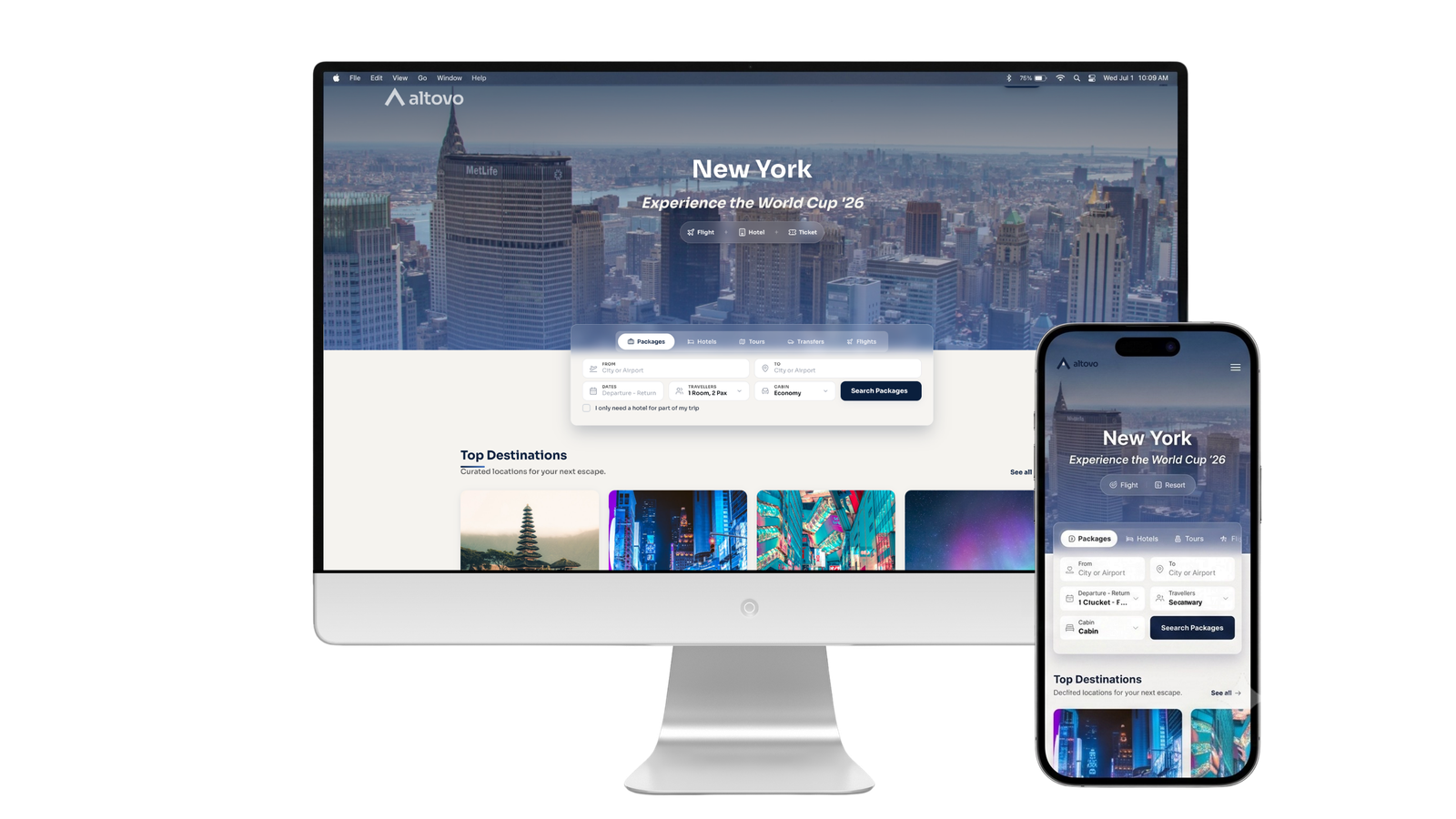
altovo (formerly easyGDS) is a travel commerce platform that brings the booking engine, multi-source content (GDS, NDC, low-cost and hotels), payments, storefront and back office together, so you run fewer vendors, get a single consolidated bill, and keep full markup control. You maintain a single integration instead of a patchwork, and your brand stays on the front the whole way through. See the platform for the full picture, compare content options in our guide to GDS alternatives for travel agencies, read how the storefront works in white-label booking engine, and see how it comes together for travel agents.
Trusted by teams like

Frequently asked questions
What software does a travel agency need?
At a minimum, a travel agency needs a booking engine to search and confirm travel, content sources for flights and hotels, a payment provider, a website or storefront to sell through, and back-office tools for markups, invoicing and reporting. Many agencies also add a CRM and a mid-office system as they grow. A travel commerce platform can bundle most of these into one product.
Do I need a GDS to run a travel agency?
No. A GDS is one way to source flight and hotel content, but it is not the only way. Modern agencies mix GDS with NDC, low-cost carrier connections and hotel aggregators, and a platform can give you access to that content without you holding every contract directly.
Can one platform replace multiple travel tools?
Yes. A travel commerce platform combines the booking engine, content, payments, storefront and back office in one product, so you run fewer vendors and maintain a single integration instead of stitching separate tools together. That usually means less engineering, one bill and fewer points of failure.
How much does a travel agency tech stack cost?
Costs vary widely depending on whether you buy separate tools or consolidate onto a single platform. A patchwork of point tools can carry several subscriptions plus per-booking fees and integration work, while a single platform puts most of that under one contract and one bill, which makes costs easier to predict.
Replace the patchwork with altovo
Talk to our team and see how your whole stack fits under one roof.
Get started →